Menu:

 
Picture
I like to scan the internet for helpful tools that parents can put to use immediately.  I have no vested interest in any of these programs, but I do think you may find them of service to you in working with your children:

Behavior Contracts

First, how many times have you worked to put together a behavior contract, rules, or expectations for your children.  My wife and I worked on many different systems.  In the last few months, I came across Behavior Contracts, a site where, for a minimal price, you can have the lifetime right to use any of their behavior contract templates for rules/expectations, chores, and morning/evening routines.

From the site FAQ:

What are the benefits of behavior contracts?
They provide structure and consistency.
They establish clear expectations.
They are fair and mutually beneficial.
They teach responsibility and self-discipline.
They encourage parents and children to work together.

Animal Agentz

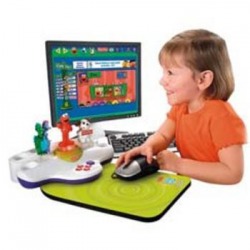
Much of the cutting edge, evidence based and effective therapy is rooted in cognitive-behavior theory.  However, the challenge I have found in working with kids, is that cognitive behavior therapy was originally designed with an adult population.  Animal Agentz uses great technology to help kids have fun while learning different cognitive behavior skills.  Check it out!

Advanced Brain Technologies


This company has products and is conducting constant research on how music can be utilized to nourish the brain and regulate emotions, promoting mental health and personal growth and development.  They have been also utilizing it to promote self-calming and regulation for children with ADHD, autism spectrum conditions, and kids who are overly-sensitive to stimuli.

I hope you might find some of this helpful.  I am going to continue to check them out both for my practice and for my own family.


I was very fortunate, in some of my recent internet research, to come across a website for Michelle Garcia Winner, one of the pioneers in cutting edge solutions for helping those on the spectrum better communicate within an NT context.

This post will summarize some of the foundational concepts behind her social thinking approach. 

1.  Most neurotypical children are 'hard wired' since birth to engage in social thinking, much like walking.

2.  Early on, neurotypical children engage in 'joint attention.'  This means that they intuitively look at the other person's eyes to figure out what they are thinking, and to know how to respond.  With this skill, they are able to cooperate, share their imaginations with others, and work in groups.

3.  Children engage in play with their peers in preschool.  Play gives kids the skill base to sit and learn in a classroom.

4.  Kids on the spectrum who have average language skills do not intuitively learn social information or social thinking in the same way that neurotypical children do.  However, they can be they can be cognitively taught how to think socially and understand the use of related social skills.

These children can learn a frame of reference for social decoding and learning, much in the way you and I would need to learn a language if we travelled to a foreign country to live for a long period of time.


I have spent a lot of time working with 'Aspies' (a term commonly used for by persons who have been gifted with Asperger's and Autism in referring to themselves).  I have spent a lot of time with their parents, spouses, children as well.  One of the most common misconceptions that "NT's" (those of us who are 'neurotypical') have is that Autism or Aspergers is a disability.  One of the most common disappointments, or complaints, Aspies have is that NT's are trying to make them change who they are, as if they were somehow deficient.  Unfortunately, that is a very dehumanizing view of people.  Rather, any of us, whether we be NT's, or a person struggling with a different type of life problem (and who of us does not, this writer included!), need to understand that every person is an amazing creation, with limitless abilities, possibilities, talents, and gifts.

I choose to see and appreciate those gifts, nurture them, and bring them forth in each client.  And I am blessed to learn from every person who I enter into a collaborative working relationship with.